
The U.S. Treasury has announced its first bond buyback operation following its August announcement that it would at least double the maximum size of its liquidity-support buyback operations for longer-dated Treasury securities. The maximum size was increased from $2 billion to at least $4 billion per operation for securities in the 10–20-year and 20–30-year maturity sectors.
The actual buyback operation is scheduled to take place later today. However, the announcement of the operation has already triggered a notable reaction across the Treasury and gold markets.
Buyback Size Increased to $6 Billion
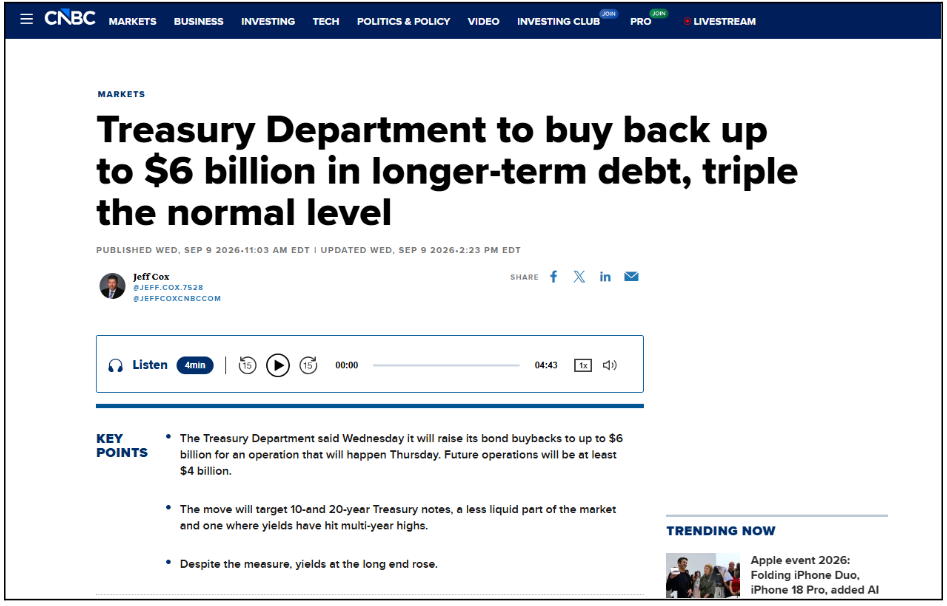
On Wednesday, the U.S. Treasury announced that it would buy back up to $6 billion of longer-dated Treasury securities in its upcoming operation. This was larger than the previously expected $4 billion amount, representing an additional increase in the potential size of the buyback.
Under normal market conditions, a larger Treasury buyback could provide support to longer-dated Treasury prices by increasing demand for existing securities. Since bond prices and yields generally move in opposite directions, stronger demand for bonds could potentially push Treasury yields lower.
However, the market reaction to the announcement was the opposite.
Treasury Yields Rise Despite Larger Buyback
Following the announcement, yields across key longer-dated Treasury securities moved higher:

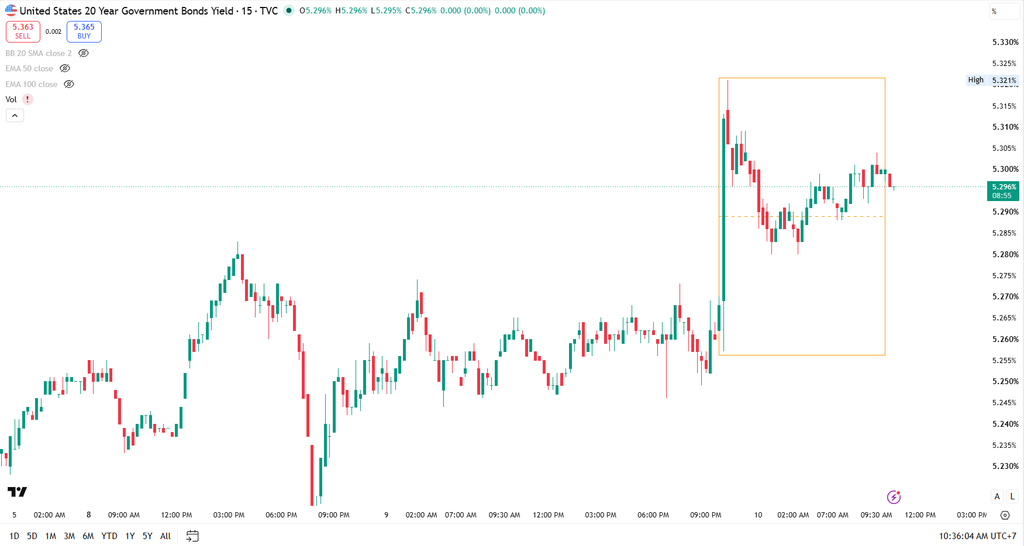
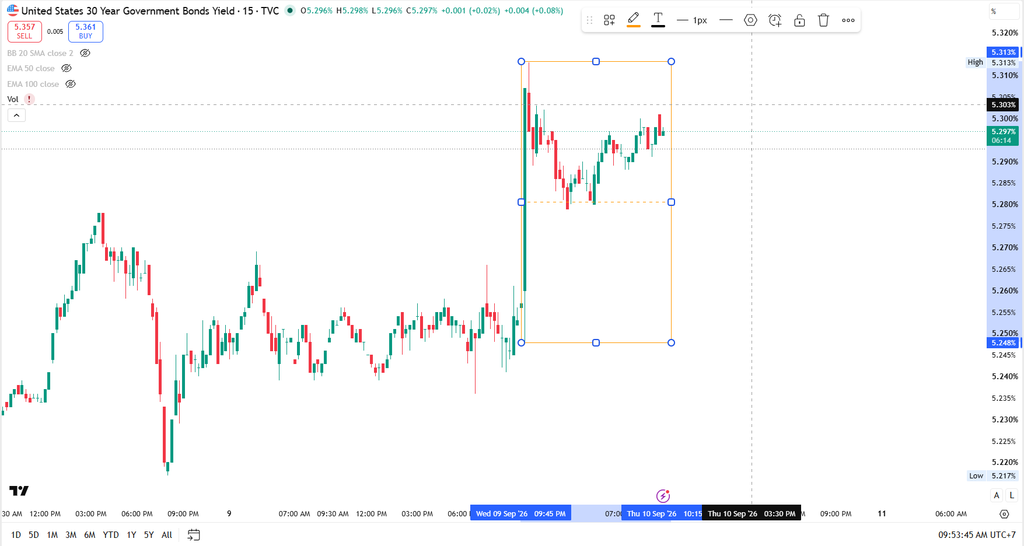
| Treasury Yield | Before Announcement | After Announcement |
| 10-Year | 4.812% | 4.851% |
| 20-Year | 5.269% | 5.312% |
| 30-Year | 5.260% | 5.307% |
The rise in yields suggests that the larger-than-expected $6 billion buyback announcement was not enough to significantly improve sentiment in the Treasury market. While the announced amount exceeded the previously expected $4 billion, some analysts attributed the muted reaction to the fact that the increase was not large enough to create a significant surprise for the market.
Broader Pressure on Treasury Yields
The upward move in Treasury yields comes against a broader backdrop of factors putting pressure on the bond market.
U.S. government debt has recently surpassed $40 trillion, raising concerns over the growing supply of Treasury securities and the government’s long-term borrowing needs. At the same time, inflation fears remain elevated amid the impact of tariffs and geopolitical tensions surrounding the Iran war.
Energy prices have also added to inflation concerns, with crude oil rising sharply and briefly moving above $100 per barrel on Wednesday. Higher energy prices could contribute to renewed inflationary pressure, potentially reducing expectations for faster monetary-policy easing.
These factors have continued to weigh on longer-dated Treasury securities, limiting the positive impact that the larger buyback announcement might otherwise have had on bond prices.
Gold Reaction
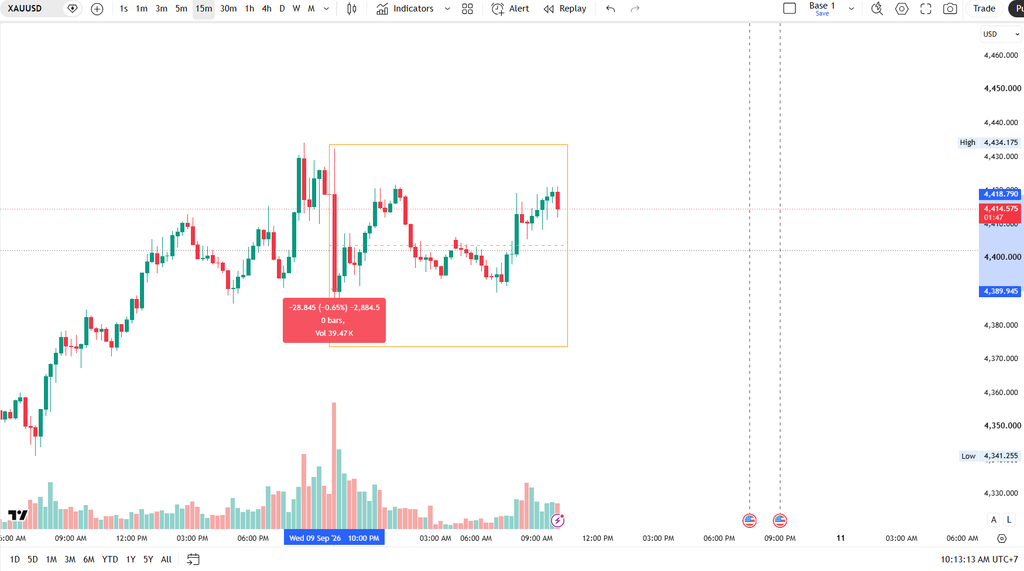
The rise in Treasury yields also initially weighed on gold, with the precious metal falling approximately 0.65% following the buyback announcement.
However, gold experienced significant two-way volatility, as reflected by both the upper and lower wicks of the candlestick. This indicates strong buying and selling pressure around the announcement, rather than a straightforward decline.
Gold has since retraced much of its initial decline and moved back toward pre-announcement levels, suggesting that the initial reaction to the rise in Treasury yields has partially faded.
With the actual Treasury buyback operation scheduled for later today, market participants will be watching to see whether the purchase itself provides additional support to longer-dated Treasury prices and potentially reverses some of the initial rise in yields.