
This report provides an analysis of the primary factors influencing gold prices, offering insights for investors.
Disclaimer: All information presented is for educational purposes only and should not be interpreted as financial advice or a recommendation for trading or investment decisions.
Fundamental Analysis
Recap of August
August 2026 marked a significant turning point for gold and global financial markets, as the precious metal shifted into a more broadly bullish environment following four consecutive months of declines from February through June. While July primarily prevented further losses, August saw gold benefit from a combination of weaker U.S. labor-market conditions, shifting Federal Reserve rate expectations, a weaker U.S. dollar, and renewed concerns surrounding the U.S. fiscal outlook.
The month began with a significant deterioration in the U.S. labor market, as July nonfarm payrolls unexpectedly declined by 23,000 compared with expectations for an increase of around 85,000, meaning the economy actually lost jobs during the month. This marked a second consecutive month of weaker-than-expected employment data and reduced expectations for a near-term Federal Reserve rate hike, providing an initial boost to gold.
However, inflation remained a key counterweight to expectations for monetary policy easing. The minutes of the July FOMC meeting, released in August, revealed growing concerns among policymakers about persistent inflation, with three out of twelve members having dissented in favor of a rate hike and many participants indicating that further tightening could be necessary if inflation remained above the Federal Reserve’s 2% target. Meanwhile, July’s inflation data remained relatively firm, with the Consumer Price Index (CPI) rising 3.4% year-on-year. By the end of the month, the July Personal Consumption Expenditures (PCE) Price Index showed inflation holding at 3.7%, reinforcing uncertainty surrounding the Federal Reserve’s next policy move.
At the same time, U.S. Treasury markets came under renewed pressure. The 30-year Treasury yield climbed to its highest level since 2007 amid concerns over the U.S. national debt surpassing the $40 trillion threshold along with the ongoing conflict involving the United States and Iran. In response to deteriorating liquidity conditions in longer-dated Treasury securities, the U.S. Treasury announced that it would at least double the size of its liquidity-support buyback operations for 10- to 30-year securities, increasing the maximum amount from $2 billion to at least $4 billion per operation. The increased buyback sizes will take effect from September 9 through November 4.
Against this backdrop, gold benefited from a generally weaker U.S. dollar and changing expectations surrounding Federal Reserve policy, while concerns over elevated Treasury yields and the U.S. fiscal outlook further supported demand for the precious metal. Although persistent inflation prevented a clear shift toward monetary easing, weakening labor-market conditions and reduced expectations for near-term rate hikes helped create a more supportive environment for gold. Overall, August represented an important shift in market sentiment, with gold recovering strongly after its prolonged decline earlier in the year, while investors entered September focused on the Federal Reserve’s next policy decision and the evolving outlook for U.S. inflation, employment, and government debt.
U.S. Treasury Bond Buybacks to Begin in September
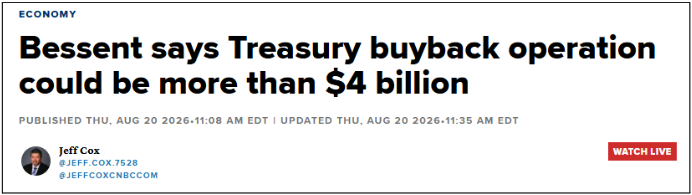
As mentioned in the August recap, the U.S. Treasury announced last month that it would increase the size of its bond buyback operations from $2 billion to at least $4 billion per operation for 10- to 30-year Treasury securities. While the announcement was made in August, the increased buyback operations will begin this month, starting September 9.
Treasury Secretary Scott Bessent has also indicated that the program could ultimately be larger than the initially announced $4 billion, raising the possibility of further support for liquidity in the long-term Treasury market. Traders should therefore closely monitor the Treasury’s upcoming buyback operations and any further comments from Treasury officials for signs that the program could be expanded beyond the currently announced amount.
If the Treasury expands the buyback program beyond the currently announced $4 billion, the additional demand for longer-term Treasury securities could help put downward pressure on long-term yields and provide further support for gold. However, the impact on yields will also depend on broader market conditions, particularly expectations for inflation, economic growth, and Federal Reserve policy.
Inflation Remains a Concern for the Federal Reserve as the FOMC Meeting Approaches

Federal Reserve Chair Kevin Warsh’s recent speech at the Jackson Hole Symposium has significantly changed the outlook for the Federal Reserve’s September 15–16 FOMC meeting. While markets had increasingly focused on weakening labor-market conditions, as shown by 2 consecutive months of weak Nonfarm Payrolls figures, and the possibility of monetary easing, Warsh shifted attention back toward persistent inflation, warning that the Fed may still have “work to do” if it cannot gain greater confidence that underlying inflation is moving toward its 2% target at a sufficient pace.
Warsh acknowledged that recent inflation data has cooled somewhat, but argued that the improvement has not been strong enough to demonstrate that underlying price pressures are meaningfully easing. This is particularly important for the September meeting because the Fed will have several additional economic indicators to assess before making its decision, including the August employment report and August Consumer Price Index (CPI) data. The August CPI report is scheduled for September 11, only a few days before the FOMC meeting, making it a particularly important data point for determining whether Warsh’s concerns about persistent inflation are reinforced or alleviated.
Warsh’s comments have contributed to a shift in market expectations toward a greater probability of a September rate hike. As of September 1, the CME FedWatch Tool is pricing in a 66.4% probability of a rate increase and a 33.6% probability of a rate hold.
For gold, this creates a more challenging near-term environment. A higher probability of a rate hike could push U.S. Treasury bond yields and the U.S. dollar higher, increasing the opportunity cost of holding gold and potentially putting downward pressure on prices. Conversely, if upcoming economic data shows further deterioration in the labor market or a meaningful easing in inflation, rate-hike expectations could retreat, weakening the dollar and yields while providing renewed support for gold.
Therefore, investors should closely monitor the August employment and inflation data ahead of the September FOMC meeting. The key question for gold in September will be whether the incoming data confirms Warsh’s concerns about persistent inflation or instead gives the Fed greater confidence to maintain its current policy stance. A more hawkish Fed would create headwinds for gold, while signs that inflation is easing alongside a weakening labor market could revive expectations for monetary easing and provide further upside potential for the precious metal.
The US and Iran Restart Exchange of Fire
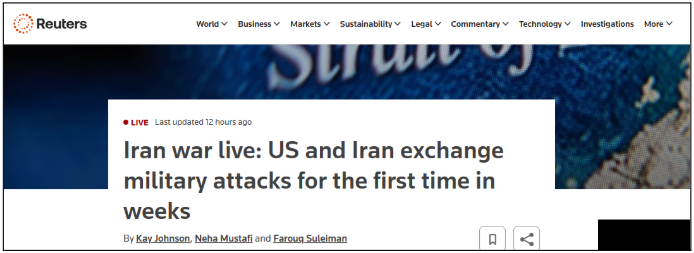
The U.S.-Iran conflict remained relatively contained throughout August, with no major military escalation between the two sides, although the United States increased economic pressure on Iran through additional sanctions and threats of secondary sanctions against entities continuing to do business with Tehran. However, tensions have resurfaced at the start of September after the U.S. and Iran exchanged military attacks for the first time in several weeks.
On Sunday, the U.S. military struck two launchers on Iran’s Larak Island, which a U.S. official said were attempting to deploy mines into the Strait of Hormuz. On Monday, Iran said it responded by launching missiles toward U.S. military bases in Jordan, while Jordan said the missiles were intercepted. While neither side has indicated that it intends to significantly escalate the conflict, the renewed exchange of fire highlights the risk of further disruptions in the region.
For September, investors should closely monitor whether tensions escalate further, particularly around the Strait of Hormuz, which could put upward pressure on oil prices and add to inflationary pressures. This would be especially important ahead of the September 17 FOMC meeting, as a renewed rise in energy prices could reinforce concerns over persistent inflation and strengthen expectations for higher interest rates. Such a scenario could support the USD and Treasury yields while putting pressure on gold.
Global Bond Sell-Off Deepens as Yields Rise Across Major Markets
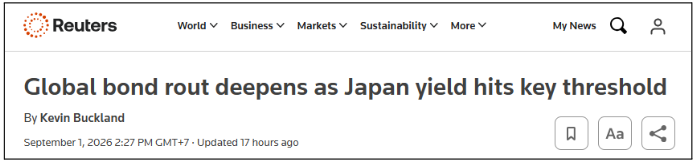
Global bond markets came under renewed pressure at the start of September, with government bond yields rising across several major economies. Japan’s 10-year government bond yield climbed to 3% for the first time since 1996, while U.S. and German 10-year Treasury yields also reached their highest levels in months and years respectively. The broad-based rise in yields highlights growing concerns among investors over inflation, monetary policy, and the fiscal outlook across major economies.
Several factors are contributing to the sell-off. Persistent inflation concerns, particularly amid geopolitical tensions and elevated energy prices, have reduced expectations for monetary policy easing in some major economies. At the same time, rising government debt and increased borrowing needs have raised concerns about the supply of government bonds and the compensation investors demand for holding longer-term debt. In Japan, the rise in domestic yields is particularly important as higher returns on Japanese government bonds could make domestic assets more attractive to Japanese investors, potentially reducing demand for overseas bonds and adding further upward pressure to global yields.
The rise in long-term yields could have broader implications for financial markets. Higher yields generally increase borrowing costs and can place pressure on equity valuations, particularly for growth-oriented assets whose valuations depend heavily on future earnings. For gold, the impact is also important because higher Treasury yields increase the opportunity cost of holding a non-yielding asset. However, the underlying reason for rising yields will remain crucial. If yields continue to rise because of stronger growth and expectations for higher-for-longer interest rates, this could weigh on gold. On the other hand, if yields rise primarily because of concerns over inflation, fiscal sustainability, or higher term premiums, the relationship with gold could become more complex.
Investors should therefore closely monitor whether the global bond sell-off continues throughout September, particularly the direction of U.S. and Japanese government bond yields. The movement in long-term yields will also need to be considered alongside the Federal Reserve’s September 17 FOMC meeting and the U.S. Treasury’s increased bond buyback operations beginning September 9. A continued rise in global yields could create headwinds for gold and risk assets, while signs that yields are stabilizing or reversing could provide some relief to financial markets.
Gold Outlook for September: Key Fundamental Drivers
Factors Supporting Gold Prices: Gold could find further support in September if expectations for Federal Reserve monetary easing return, particularly if upcoming U.S. employment and inflation data show further signs of economic weakness or moderating price pressures. A weaker labor market or softer-than-expected inflation could reduce expectations for a September rate hike, potentially weakening the U.S. dollar and Treasury yields while lowering the opportunity cost of holding gold. Meanwhile, the U.S. Treasury’s increased bond buyback operations, beginning September 9, could provide additional support to longer-term Treasury prices and potentially put downward pressure on yields. If the Treasury expands the program beyond the currently announced $4 billion per operation, the additional demand for longer-term Treasury securities could provide further support for gold.
Factors Weighing on Gold Prices: Despite these supportive factors, gold continues to face significant downside risks from persistent inflation and a potentially more hawkish Federal Reserve. Kevin Warsh’s recent comments have increased expectations for a September rate hike, while stronger-than-expected inflation data could reinforce the view that interest rates need to remain higher for longer. Higher rate expectations could support the U.S. dollar and Treasury yields, increasing the opportunity cost of holding gold and putting downward pressure on prices. Meanwhile, the ongoing global bond sell-off could continue to push long-term yields higher across major markets, creating additional headwinds for gold. Escalating geopolitical tensions between the United States and Iran could also create downside pressure for gold if disruptions around the Strait of Hormuz push oil prices higher. Higher energy prices could add to inflationary pressures, potentially strengthening expectations that the Federal Reserve will maintain higher interest rates or even raise rates further, which could support the U.S. dollar and Treasury yields while weighing on gold. If Treasury yields continue to rise amid persistent inflation concerns and fiscal risks, gold could face further pressure. Conversely, if yields begin to ease, gold could find renewed support.
Technical Analysis
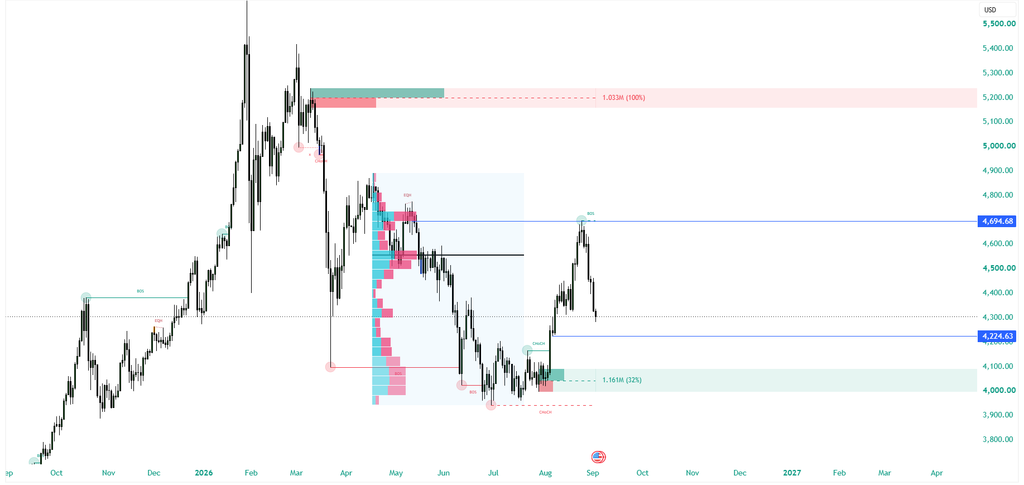
Gold is currently in a distribution phase within a broader downtrend. Based on the volume profile, the market rejected sharply after testing $4,694.00, a major confluence zone representing both a high-volume cluster and weekly resistance. This downward momentum indicates that the market’s downside target could reach $4,224.00 this week, with potential for further declines if expectations for interest rate hikes remain elevated.
Key Technical Zones
- Weekly Resistance & Volume Cluster at $4,694.00: A formidable overhead resistance area that recently triggered a sharp price rejection, confirming strong institutional selling interest.
- Support Level 1 at $4,224.00: The immediate downside support level and the primary lower boundary of the current distribution phase.
- Last Month Point of Control (POC) / Strong Support at $4,051.00: The highest volume level from last month, serving as major structural support and a likely temporary stabilization zone for price action moving forward.
Trading Strategy
- Bearish Bias: The overarching trend remains decidedly bearish. The swift rejection from the $4,694.00 volume cluster and weekly resistance confirms aggressive selling pressure. Long entries should be approached with extreme caution, as the broader market momentum continues to target lower structural zones.
- Continuation / Pullback Scenario:
- Continuation: If the price continues downward as expected toward Support Level 1 at $4,224.00 and breaks below it, selling momentum is likely to accelerate toward the Last Month POC around $4,051.00, especially if fundamental pressure from rate hike expectations persists.
- Pullback: If a short-term relief bounce occurs, the market could retest the overhead resistance levels, offering favorable, high-probability opportunities for fresh short entries aligned with the dominant trend.