
The U.S. Federal Reserve raised interest rates by 25 basis points early Thursday morning at 2:00 AM (GMT+8), marking the first rate hike since July 2023. The Federal Open Market Committee (FOMC) voted unanimously 12–0 to raise the federal funds target range from 3.50%–3.75% to 3.75%–4.00%.
Why Did the Fed Raise Rates?
The Fed’s latest statement continued to highlight persistent inflationary pressure. The statement noted that “inflation remains elevated” and said that the latest policy action would support a timelier return to the Fed’s 2% inflation target.
At the same time, the U.S. economy continues to show resilience. The Fed stated that economic activity is expanding at a solid pace, while domestic spending remains resilient. It also highlighted strong productivity growth and robust capital investment, while job gains have kept pace with the workforce and the unemployment rate has changed little.
This combination of persistent inflation and resilient economic activity gives the Fed room to maintain a restrictive monetary policy stance.
What Could Happen to Interest Rates Next?
Fed Chair Kevin Warsh continued to avoid committing to a specific path for future interest-rate decisions, leaving the next moves dependent on incoming economic data.
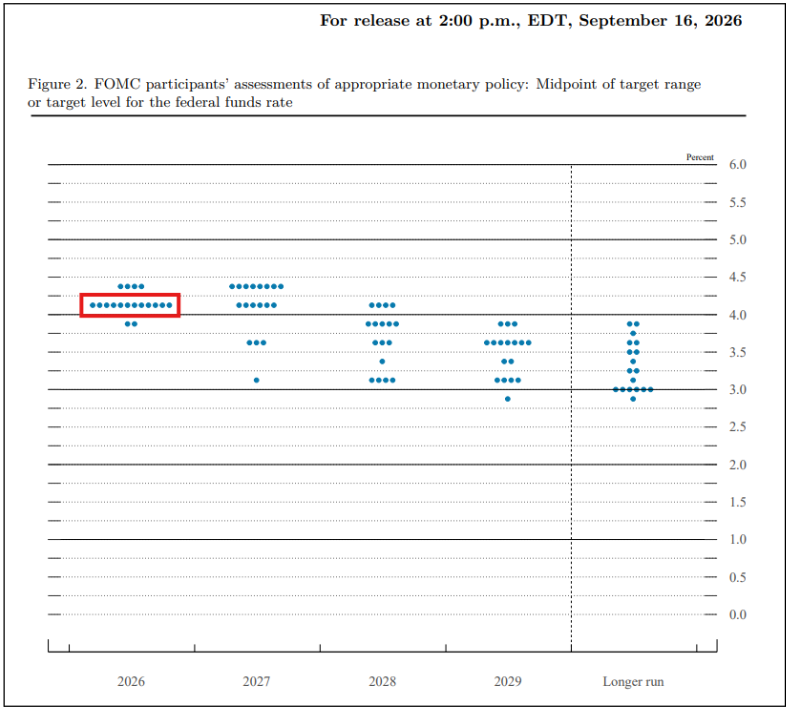
However, the latest Fed dot plot provides some insight into policymakers’ current expectations. The median projection for the federal funds rate at the end of 2026 is 4.1%, compared with 3.8% in the previous June projection. This suggests that policymakers, on average, see room for one additional 25-basis-point rate hike before the end of 2026, potentially bringing the target range to 4.00%–4.25%.
The median projection remains at 4.1% for 2027, suggesting that policymakers currently expect rates to remain around this level through next year. The median then falls to 3.9% in 2028, indicating that some rate cuts could begin by then. However, these projections are not commitments, and the actual path of interest rates will depend on future economic and inflation data.
What Does This Mean for Gold?
Higher interest rates generally create pressure on gold because gold does not generate interest income. As interest rates and yields rise, the opportunity cost of holding a non-yielding asset such as gold can increase.
With the Fed now raising rates and its latest projections pointing to the possibility of another hike before the end of 2026, the macroeconomic backdrop remains relatively restrictive for gold.
However, the future direction of gold will still depend on other factors, including U.S. Treasury yields, the U.S. dollar, inflation data, and expectations for future Fed policy. The key question for markets may therefore shift from whether the Fed has started hiking again to how far the Fed is willing to take rates and how long it intends to keep them elevated.