
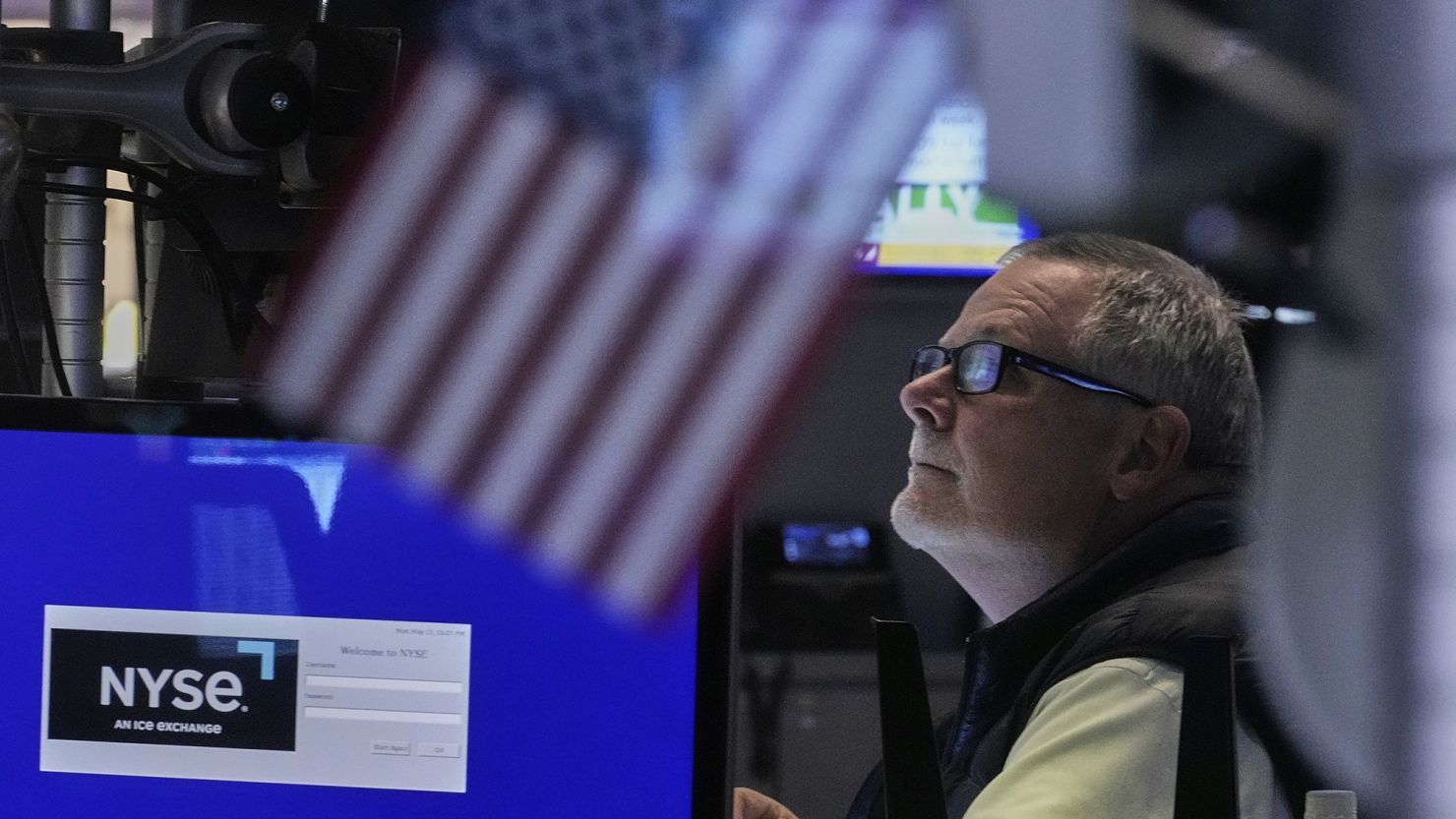
Despite being a lagging indicator, the Gross Domestic Product and PCE Price Index tonight will work as a parameter to confirm the conditions of the economic outlook and inflation progress for quarter 1. Tonight’s data will focus on the first quarter, which is considered the beginning of the trade conflict and weaker sentiment from the market voice. And that might be the reason why many analysts support having a lower projected GDP and a higher PCE price index for this quarter. Even recently, the FOMC meeting minutes brought out the possibility of having continued lower economic growth while risking higher inflation data, and that also increases the likelihood of having a recession even further. Plus, Ray Dalio and Paul Krugman also warned about the recession odds in early May, given the tariff impact expectation. So here is the deal: what would happen? The market might already be aware of this, and possibly might not move much if considering the economic data alone. However, if by chance the data come out so much unexpectedly, then this also might cause some volatility as well. Do take note, but don’t bet all in Anything that boosts the US economy will strengthen the USD, and vice versa for a weaker US economy.
A Slump In the GOLD Price, Led By Trump’s Authority Restriction
Gold prices fell to the lowest level of the week at $3,245 per ounce, followed by a blockage on President Donald Trump’s trade deal for overstepping congressional authority. This comes when the US trade court found Trump exceeded his authority by claiming trade deficits and drug trafficking posed national emergencies, particularly with China, Canada, and Mexico, and that possibly result in a negative impact on the global market. Under Ole Hansen of Saxo Bank in a note. “Currently, gold is lacking a clear directional trend, primarily due to conflicting macroeconomic signals and investor hesitation.” Therefore, having such a stop on tariff tension has given some breathing time for the investor unless another escalation of tension reoccurs once again. ***Higher Uncertainty or tension leads to a GOLD price surge*** That also refers to Other Important news: The FOMC meeting minutes revealed increasing concern over inflation and labor market weakness, yet the Federal Reserve opted to keep rates steady amid the uncertainty. The current market reaction: Following the news release, the Gold price has gone down to $3,245 per ounce, while the DXY and US10Y surged notably.
What you need to know: US consumer confidence, Donald Trump’s event, and the Federal Reserve
The US consumer Confidence Surprisingly, US consumer confidence exceeded 98 sharply in view of seeing an improvement in the economic outlook and labor market after some easing of tension on tariff threats in May. Some sources cited that this survey was cut off on May 19, which half was responded to after the US-China temporarily eased the trade deal and resulted in a positive boost in this month’s figure. President Donald Trump → Escalation → would boost the GOLD prices. → settle down or ease the tension → The GOLD price might decline. The Federal Reserve Federal Reserve President John Williams raised further concerns about persistent inflation and urged the central bank to take the necessary steps to achieve a sustainable 2% inflation rate. He believes that this inflation could become “permanent,” as this might risk prolongation.

Weekly Data Summary Report As of May 26, 2025
Weekly Data Summary Report As of May 26, 2025 Below is the summary of the United States, which is mainly based on economic indicators, critical events related to President Donald Trump’s trade conflict with other trading partners, and GOLD prices within this week. Disclaimer: Please note this is opinion-based; do not take it as investment advice. The United States: The Federal Reserve (FED) The Federal Reserve members are leaning toward a “wait and see” approach while addressing the inflation problem, labor shortage, and their concerns about the debt levels that have been rising for years. In fact, uncertainty in tariffs has been painfully undermining consumer and business confidence, which could possibly lead to softening in the labor market. However, if the debt problem adds on and arises further, then this confidence will definitely slump further. All of these could become anchors to hawkish speech and uncertainty, as some downgraded the rate cut projection, while some forecasters see a stagflationary outcome. Therefore, the Federal Reserve will have two choices: either prioritize the inflation problem through tightening or prioritize the economic outlook through easing. According to the CME FedWatch tool, the market is pricing in more than 90% of holding the rate and starting the rate cut in September. While the Federal Reserve’s Bostic anticipates one rate cut this year as the inflation concerns increase. Opinionated: My guess on this depends heavily on the degree of inflation impact and debt level. If they fail to secure both, then easing would be my likely scenario, albeit in a long-term projection, probably holding the rate until the end of the year or even mid-next year. The reason would be that they might avoid choosing hiking, as this will add to their debt levels. Other Important News: The market Reaction: Gold price recovered and surged by 5.60% this week, given how the tension and uncertainty have once again sparked.
Gold Price Drivers: What You Need to Know
Geopolitical Tension A growing geopolitical tension between Israel, Yemen, and Gaza continued to spark, raising more death toll and starvation within, while pushing investors to seek safe-haven assets further. US Treasury selloff and Tax cut President Donald Trump’s other agenda in his presidential term is to reduce the tax bills for US citizens, but not many agree with this. As this continues, there are signs of growing concerns over the debt load, which has led to a US Treasuries’ long-term bond selloff on Wednesday. Along with Moody’s downgrade last Friday and debt piles, this could trigger yields to become more expensive as investors seek higher yields against the risk associated, bringing more instability within the US bond market and forcing them to choose a safer haven asset such as the yellow metal. Opinionated: Unless Trump stabilizes the trade agreement and reassures the market that he will possibly reduce the debt risk, then there is a greater likelihood that the market will continue to favor the gold demand in the long term. Especially when Israel continues to strike other countries, adding more uncertainty in the market. In fact, do watch out for the recent spike in Japan bond yield along with 234.9% debt to GDP (IMF source), which could possibly force the Federal Reserve to intervene. Although two-thirds of Japanese companies support holding the Bank of Japan rate decision for now, according to the Japan Corporate Survey, but if the market forces the other way around, then the risk of a debt crisis would be higher.

Gold prices and Oil prices extended further amid uncertainty arising last night.
Gold prices extended to US$ 3316.14 per ounce, while WTI crude oil surged to US$ 64.55 per barrel following the Federal Reserve’s speeches and escalation in geopolitical tension. Here are some updates: The Federal Reserve Another two Federal Reserve members voted for the “wait and see” policy approach once again last night, as risks are likely to come from both sides—inflation and labor market conditions—from the tariff effects. In fact, they stressed whether these tariffs may come as a one-time thing or are likely to become a persistent inflation over the long run. Geopolitical Tension: Israel-Iran According to CNN, new US intelligence stated that “Israel is preparing for a potential strike on Iranian nuclear facilities,” which could hinder any progress of negotiation and increase volatility in the Middle East. Although Trump’s dismantlement of nuclear program negotiations with Iran could possibly lead to easing tension, Israel’s last night move could be seen otherwise. Meaning that this could be a potential threat that possibly leads to large-scale war escalation and results in many deaths, just like what happened in Gaza. However, whether Israel’s strike comes or not is yet to be confirmed. “Golden Dome”- President Donald Trump Trump is growing frustrated with the arising threat of tension between nuclear-armed countries; he has now proposed to build the missile defense system called “Golden Dome,” which can envision both ground-based and space-based capabilities, able to detect and intercept missiles at different stages of flight. This dome will be done in about 3 years, and will cost an estimated $175 billion.
Market Dose: The Federal Reserve, Russia-Ukraine, Israel, and China
Several Federal Reserve members remain faithful to having a “wait and see” approach, despite having an uncertain outlook over the inflation problem and labor market conditions. Some also repeatedly said that tariffs and Moody’s downgrade will continue to hinder the economic situation, particularly in the inflation problem, investment, and debt piling on the US treasury bond yield. Yet, now is not a time for adjusting things that may need to seek further guidance from the data dependence. One member, the Federal Reserve’s Bostic, signaled one rate cut this year, while the CME Fedwatch Tool stands at less than 10% on cutting the rate in the next meeting. Russia-Ukraine Talk Although the peace deal negotiation starts on Monday, the progress seems to stall at some point while some are raising concerns over Trump’s diplomatic efforts to end the war, as things become less certain in his speech. One thing for sure is that he has not left out the possible sanctions on Russia or fresh weapons shipments to Ukraine yet. Israel-Gaza War Israel has bombarded Gaza since midnight, which has killed at least 43 people in Gaza after the military ordered Palestinians in the southern city of Khan Younis to flee ahead of an “unprecedented attack”. While Israel pledged to take control over the whole of Gaza, many leaders from unions, including those in the United Kingdom, France, and Canada, threatened Israel if this continued. US-China China urged the United States to adjust chip export controls—particularly referring to Huawei chips—unless the US wants to face more measures taken by China.

Weekly Data Summary Report As of May 19, 2025
Weekly Data Summary Report As of May 19, 2025 Below is the summary of the United States, which is mainly based on economic indicators, critical events related to President Donald Trump’s trade conflict with other trading partners, and GOLD prices within this week. Disclaimer: Please note this is opinion-based; do not take it as investment advice. Economic Indicators and The Federal Reserve In the economic aspect, there are two major economic indicators that provide the most crucial information regarding the US economic situation. One is the inflation data from consumers and producers, which remains above the restrictive level, and another is the demand data—retail sales, which scaled back ahead of an uncertain economic outlook and inflation pressure. Both are hindering consumer and business sentiment, which will likely restrain some consumption and growth within. As a result, Michigan consumer sentiment skewed lower this time while projections on inflation rose. With that in mind, several projections are downgrading from three rate cuts to one or two rate cuts this year. According to the CME Fedwatch Tool, two rate cuts stand on the bar as of today. Other Important News Regardless, do consider the rising debt problem in the U.S., which Moody’s reduced the U.S. credit rating from Aaa to Aa1 on Friday, and that can be explained by a recovering gold price. This move could have added more concerns about the market and led investors to profit-taking. President Donald Trump Market Reaction: GOLD prices dropped by 4.69% from last week.
Keep Updated: US-Iran Nuclear Deal, US inflation, and Recession odds.
US-Iran on Nuclear Deal A recent threat to impose Iran’s oil sanctions and repeated threats of military strikes if deals are gone have been troubling Iran’s economy, particularly oil exports. Trump threatened to “drive oil exports to zero” once again in order to stop terrorist activities and the nuclear programs. Yet, according to Bloomberg sources, Trump mentioned “getting close to an Iran nuclear deal,” hinting at a possible ending to US-Iran tension, which may also involve help from Qatar. US Economic data Softer inflation data are suggesting that businesses are absorbing additional costs from imports to maintain the demand for consumption, especially when the demand recently has been pulling back, as shown in the retail sales figures yesterday. Even the Chief US economist at Pantheon Macroeconomics, Samuel Tomb, stated that, “For now, distributors are not passing on all these extra costs to consumers.” Furthermore, Federal Reserve Governor Michael Barr also warned of the risk of supply chain disruption related to tariffs imposed, as this could lead to slower growth and inflation risk. When it comes to small businesses that have limited access to loans, high inflation would disrupt their business operations and possibly lead to bankruptcy. While JPMorgan Chase & Co. Chief Executive Officer Jamie Dimon also did not rule out the possibility of having a recession yet, given the recent uncertainty. He mentioned that a step back from both the US and china on tariffs is a good thing and hoped to continue over the long run; however, high uncertainty would also lead to a decline in investment as well. This has led the Federal Reserve to have two choices: either easing the monetary policies to support the economic growth or tightening to combat the inflation problem. Odds now stand for a rate cut in September, according to CME Fedwatch tool. While Trump continues to put pressure on for rate cuts anytime soon, he believes there is no inflation now.
Tonight’s Focus: Tracking the Consumer Price Index
Consumer Price Index Alert! Time: 7:30 PM Cambodia time Despite some easing from the trade conflicts, this does not mean that inflation will be immediately affected, aka the consumer price index tonight. This is evidence of a recent rise in the ISM price report, Gross domestic product pricing, and other crucial pieces of information. Also, bear in mind that Powell cited “an upside risk to both inflation and the unemployment rate”, especially when it comes to core inflation data—a stickiest one. This also means that if the CPI comes in higher than expected, this will diminish more rate cuts, just like what Goldman Sachs projected to lower once this year, starting in December. Otherwise, lower than expected reading would add more odds on a rate cut, which will help with the debt deficit problem, just as what Trump has committed to.